


Podcast
Labels on skincare products often look like cheater code. They’re full of long chemical names that seem unreadable. But learning to read them changes the game.
You skip the buzzwords and spot what actually matters. You shop smarter. You treat your skin better.
Let’s teach you how to read a label with confidence and purpose.
Key Notes:
- INCI lists show ingredients in order of concentration down to about 1%.
- Active ingredients should appear near the top to be effective.
- Scientific and common names often refer to the same ingredients (e.g., Tocopherol = Vitamin E).
- Watch out for vague marketing terms and hidden allergens like limonene and linalool.
- Ingredient lists don’t reveal concentrations, quality, or formula stability.
Understand the INCI Label
INCI stands for the International Nomenclature of Cosmetic Ingredients. It’s a naming system used around the globe, so ingredient names stay consistent everywhere. For example, “water” appears as Aqua on every product (same everywhere), making comparison easier.
Ingredients are listed by amount—from greatest to least—right down to about 1%. Once below that threshold, order can get shuffled.
That means the first few names show you what the formula is mostly made of. Save the lower names for actives or extras.
You may notice Latin or scientific words, like Butyrospermum parkii (Shea). That’s the formal naming system, and yes, it’s meant to be consistent, not confusing.
Spot Active Ingredients and Their Place
When you read labels like an expert, the order tells a lot. If salicylic acid appears early in the list, it’s likely present at a functional level. If it’s buried near the end, its effect may be minimal.
Functional ingredients, like niacinamide, double as barrier boosters and brighteners. On top of that, they may work even in low concentrations. But if it’s near the top, you know it’s got the clout to deliver results.
Keep an eye on ingredients known for benefits: hyaluronic acid, retinoids, peptides. Even if names like Sodium Hyaluronate mask their common equivalents, they still count in deeper doses.
Salicylic Acid Exfoliating Mask
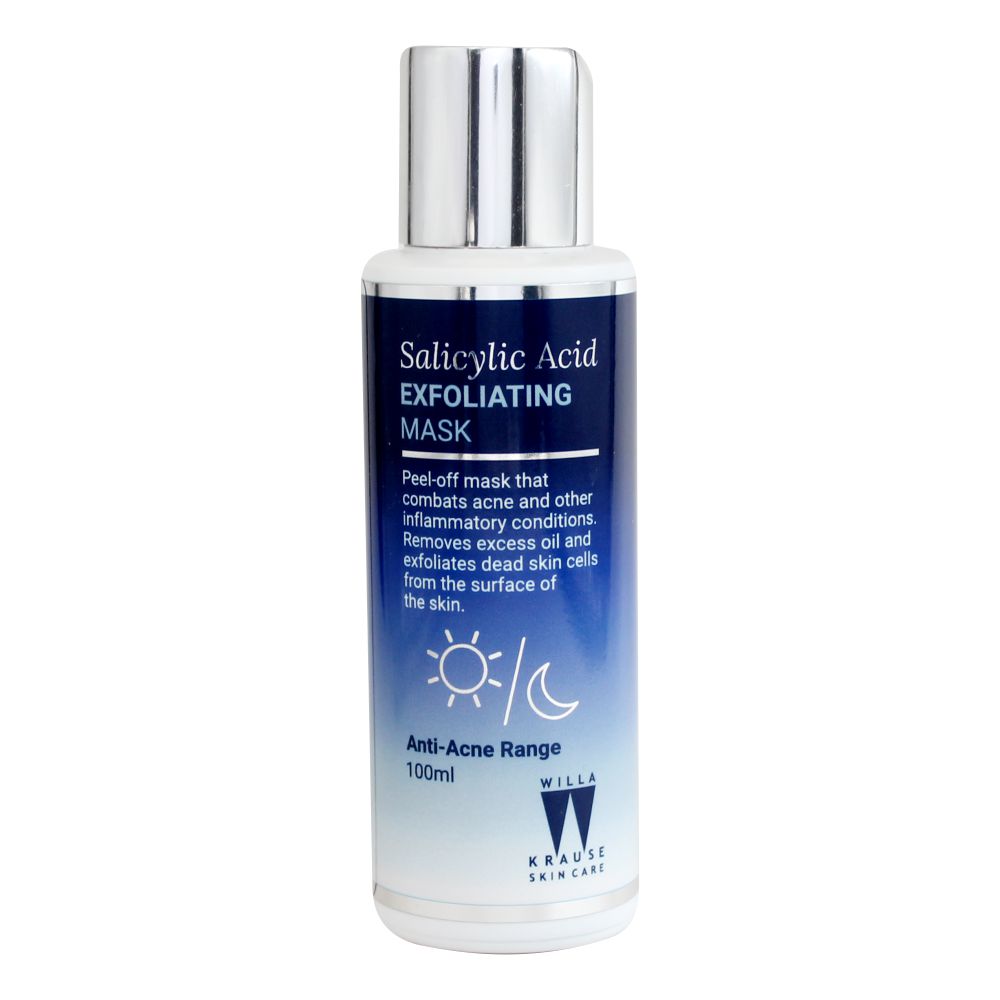
The Willa Krause Salicylic Acid Exfoliating Mask is a peel-off treatment designed to help clear congested skin and calm inflammation. Formulated with salicylic acid, a beta hydroxy acid (BHA) known for its oil-soluble exfoliating properties, this mask penetrates into pores to remove buildup, reduce blackheads, and smooth uneven texture.
By lifting away excess oil and dead skin cells, it supports a clearer, more balanced complexion, especially for those dealing with acne, clogged pores, or flare-ups. Used weekly, it helps maintain skin clarity without harsh abrasion, making it a reliable option for breakout-prone and oily skin types.
Decode Names: Common vs. Trade vs. Scientific
We often see several names for the same thing. For instance, Tocopherol is vitamin E. Ascorbic acid is vitamin C. Understanding these helps you skip the hype.
Botanical names also follow consistent structure. That long Latin name doesn’t change from France to Tokyo. That’s the point of INCI: uniformity across borders.
Some brands sneak in trade names or use code numbers. It makes it hard to tell what’s in the product. That’s why tools like INCI Decoder help, especially when names hide in plain sight.
Spot Label Tricks and Red Flags
Be suspicious of phrases like “infused,” or “glow complex.” They often distract from what’s really in the product.
Also, be cautious when labels show just a few “star” ingredients while hiding the full INCI list. Brands do this for marketing. But it hides what you might react to.
Allergens like limonene, linalool, and geraniol must be listed after the main formula. They’re often still shown in fine print or as footnotes, so always scan to the end.
Use Smart Tools to Decode Labels
Trying to look up every ingredient manually takes forever. Instead, use tools.
INCI Decoder lets you input an ingredient or product and get clear explanations—what it does, how it behaves, and its risk for irritation.
Apps like SkinSort, Think Dirty, Yuka, and SkinSAFE let you filter ingredients by what you want or wish to avoid. They help you spot allergens and problematic additives fast.
Those tools don’t replace judgement. They’re guides. Check them, but still listen to how your skin reacts.
Ingredient Lists Have Limits
Ingredient lists don’t show exact percentages. They tell order, but not quantities. The first ingredient might be 30%, or it could be 60%. We don’t know.
They also don’t show purity, sourcing, or stability. Some actives break down quickly or need certain conditions to work, which the label doesn’t cover.
That means brand formulation and testing matter. The list alone isn’t the full picture of how effective a product is.
FAQs
- Are “fragrance-free” and “unscented” the same thing?
No. “Fragrance-free” means no added scent, while “unscented” may include masking fragrances.
- What does “hypoallergenic” actually mean on a skincare label?
It’s not a regulated term. It only suggests the product may be less likely to cause allergies.
- Can ingredient order vary by country?
Yes. Some countries allow more flexibility below 1%, but most follow a top-down concentration order.
- Why do some products list “parfum” without details?
“Parfum” or “fragrance” can legally cover dozens of compounds—many undisclosed due to trade protection.
- Is it safe to mix products with strong actives like retinol and acids?
Not always. Without proper knowledge, mixing actives can irritate or compromise the skin barrier.
Conclusion
Reading a skincare label doesn’t have to feel impossible. Start with the INCI—ingredients in order. Learn the key actives and decode odd names. Watch for marketing tricks. Use apps to make sense of complex lists. And always remember: ingredient order, not hype, guides you toward smart choices.
Next time you pick up a new product, pause. Scan the INCI list. Ask yourself: Do the ingredients match your skin goals? With time, you’ll read labels like a cosmetic chemist, and your skin will thank you.
For questions and personalised advice tailored to your skin, visit your nearest Willa Krause consultant. They can help you interpret ingredients and build routines that work.